1890-1964. Starting in the 1800’s poor houses and farms were opened around the nation to care for the desitute. In the early days of Kansas statehood, individual counties were responsible for caring for their poor. When populations were small, the poor were often housed by local families who were reimbursed by the sounty. The great depression of the 1930’s compleled the federal government to impliment social security adn welfare programs. This ended the era poor farms and houses.
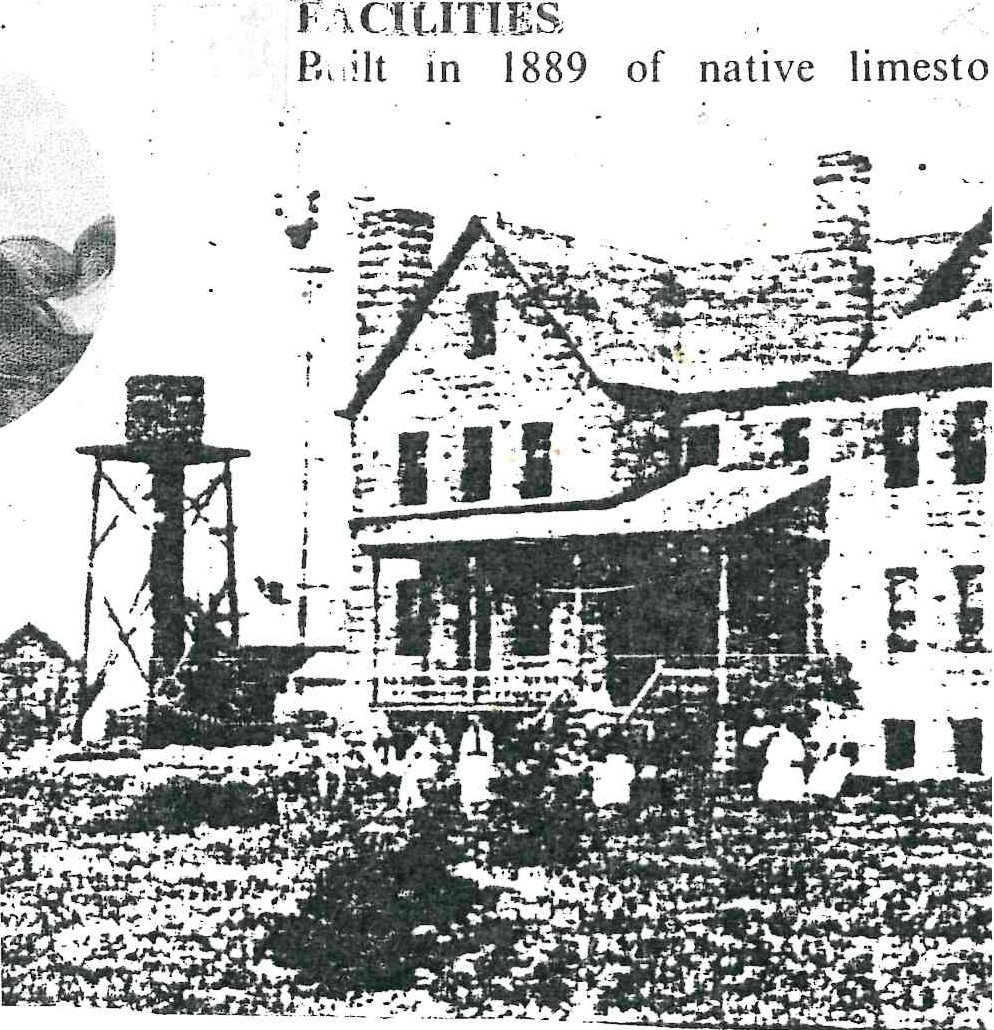
In 1888, Marion county voted to build the homeon on land it had purchased in 1877. “They chose the site because it’s in the middle of three towns–Hillsboro, Marion and Peabody—and it’s on high ground.” The county commissioners appropriated $10,000 to buy the ground and erect the building, although not all of it was used. The project was headed by the county’s well known stone mason, Fred Scheaffler of Hillsboro who cut and shaped the stone with his artisan’s hammer. The original name was the Marion County Poor Asylum.
County asylums were originally managed by county commissioners who appointed a superintendent and an attending physician. A board of visitors was also appointed to inspect the establishment at least one a year. The poor farm was renovated and converted to a rest home in 1952. In 1964 the rest home closed its doors ad was put up for public auction During this time period poor farms were being closed by teh state and replaced by nursing home and independent living. The times no longer needed the purpose for which the building was erected.
The first operator was V.P. Duvall who came to Marion from Linconville where he managed the Grand View Hotel. It was a full time job to farm the land, raie the hogs and cattle, do their own slaughtering and grow the gardens in order to feed the inmates. A popular attraction of the poor farm is the cemetery that was built on the property to bury the unclaimed deceased. This was not done at most other poor farms. One grave has drawn special attention from tourists traveling through. It is marked “deaf negro boy”. During this time Marion Count was predominately Christian Caucasion having a large Mennonite population. The local understanding is that this boy had never resided on the property but was found dead in a freight train car in Hillsboro. No one knew his name or cause of death; however th county showed respect by allowing him to be buried in the Poor Farm’s cemetery and was given a marked grave.